
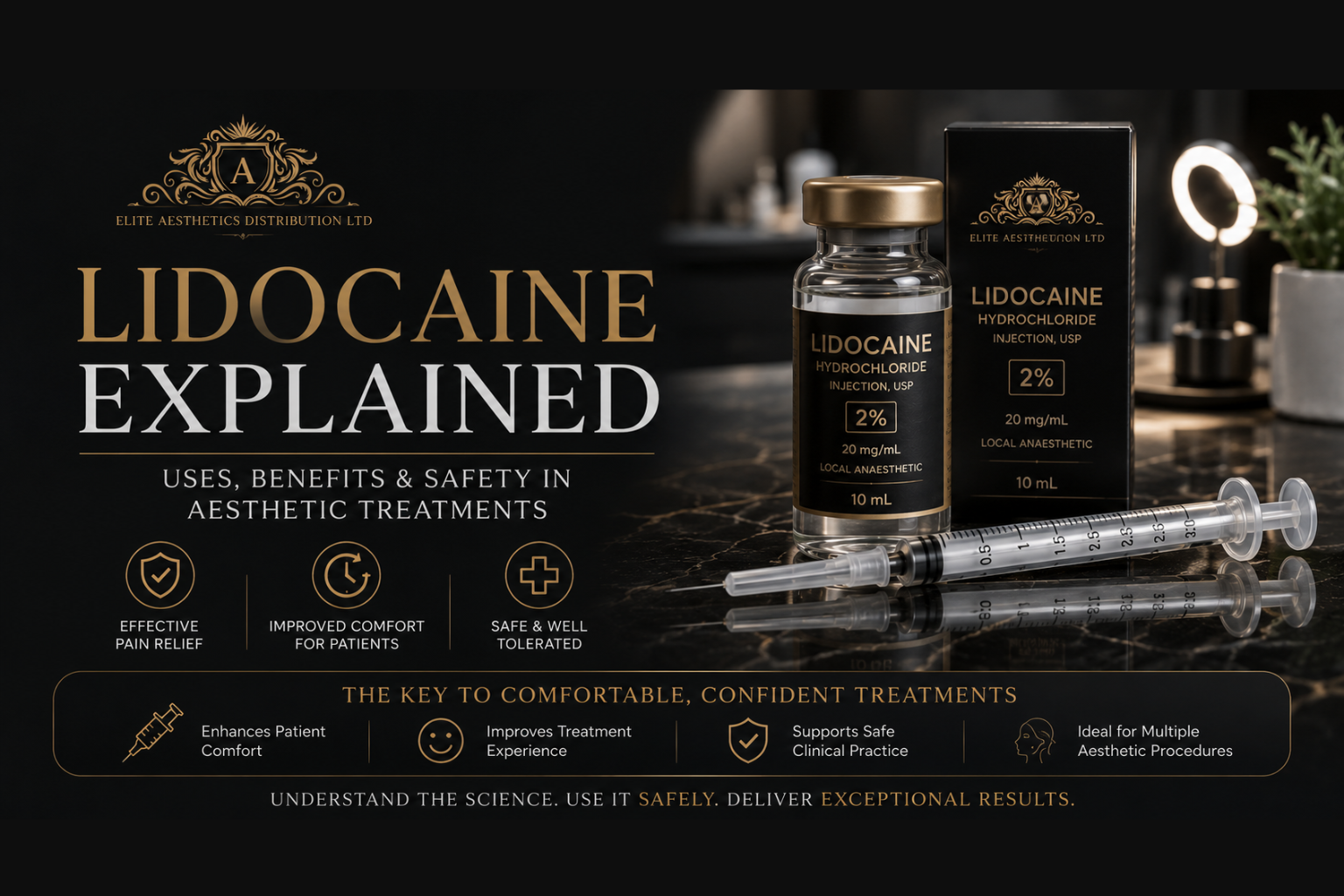
Lidocaine Explained: Uses, Benefits, and Safety in Aesthetic Treatments
If you’re performing or supplying aesthetic treatments, understanding Lidocaine isn’t optional it’s critical.
Most clinics use it daily, but very few actually understand how it impacts patient comfort, treatment quality, and overall results.
That gap? It shows in outcomes.
Let’s break it down properly.
What is Lidocaine?
Lidocaine is a local anesthetic used to numb specific areas of the body during medical and cosmetic procedures.
It works by blocking nerve signals in the targeted area, preventing pain from being transmitted to the brain.
In aesthetic treatments, Lidocaine is commonly used to make procedures more comfortable and tolerable for clients.
Why Lidocaine is Essential in Aesthetic Treatments
Here’s the reality:
Pain reduces client satisfaction even if your results are good.
Lidocaine solves that.
Key benefits:
Reduces pain during injections
Improves overall patient experience
Allows practitioners to work more precisely
Increases client retention and repeat bookings
Clinics that ignore patient comfort lose clients — simple as that.
Common Uses of Lidocaine in Aesthetic Procedures
Lidocaine is widely used across multiple treatments:
1. Dermal Fillers
Many modern fillers already contain Lidocaine to reduce discomfort during injection.
2. Botox Injections
While Botox is less painful, Lidocaine can still be used for sensitive clients.
3. Microneedling & Skin Treatments
Topical Lidocaine creams are often applied before procedures to minimize discomfort.
4. Laser Treatments
Used to numb the skin before high-intensity treatments.
Types of Lidocaine Used in Aesthetics
Not all Lidocaine products are the same.
Injectable Lidocaine
Fast-acting
Used during procedures
Requires proper handling and professional use
Topical Lidocaine (Creams/Gels)
Applied before treatment
Takes time to activate
Ideal for surface-level procedures
Using the wrong type for the wrong procedure leads to poor experience.
Safety: What You Need to Know
This is where many clinics get careless.
Lidocaine is safe when used correctly but misuse can lead to complications.
Important safety points:
Always follow recommended dosage
Avoid use on damaged or infected skin
Check for allergies before application
Use only verified, high-quality products
Cutting corners here is not just risky it’s irresponsible.
How Lidocaine Improves Treatment Results
Most people think Lidocaine is just about comfort.
That’s incomplete thinking.
When a patient is relaxed:
Muscles are less tense
Movements are reduced
Injection precision improves
That directly affects your final result.
Better comfort = better outcomes.
Choosing the Right Lidocaine Product
Here’s where your purchasing decision matters.
Don’t choose based on price alone.
Look for:
Consistent formulation
Trusted sourcing
Proper storage and handling
Professional-grade quality
Cheap products often mean inconsistent numbing which leads to poor client experience.
Mistakes Clinics Make with Lidocaine
Let’s be direct:
Using low-quality products
Incorrect dosage
No allergy testing
Poor storage conditions
Over-reliance without understanding
These are operational failures not knowledge gaps.
Final Thoughts
Lidocaine isn’t just a support product it’s part of your treatment quality.
If your goal is to deliver consistent results and build long-term client trust, you can’t afford to treat it casually.
Source Reliable Lidocaine Products
At EAD UK, we supply high-quality, clinic-grade Lidocaine products designed for professional use in aesthetic treatments.
Explore our collection and ensure every treatment you deliver is comfortable, safe, and precise.
eaduk.com