
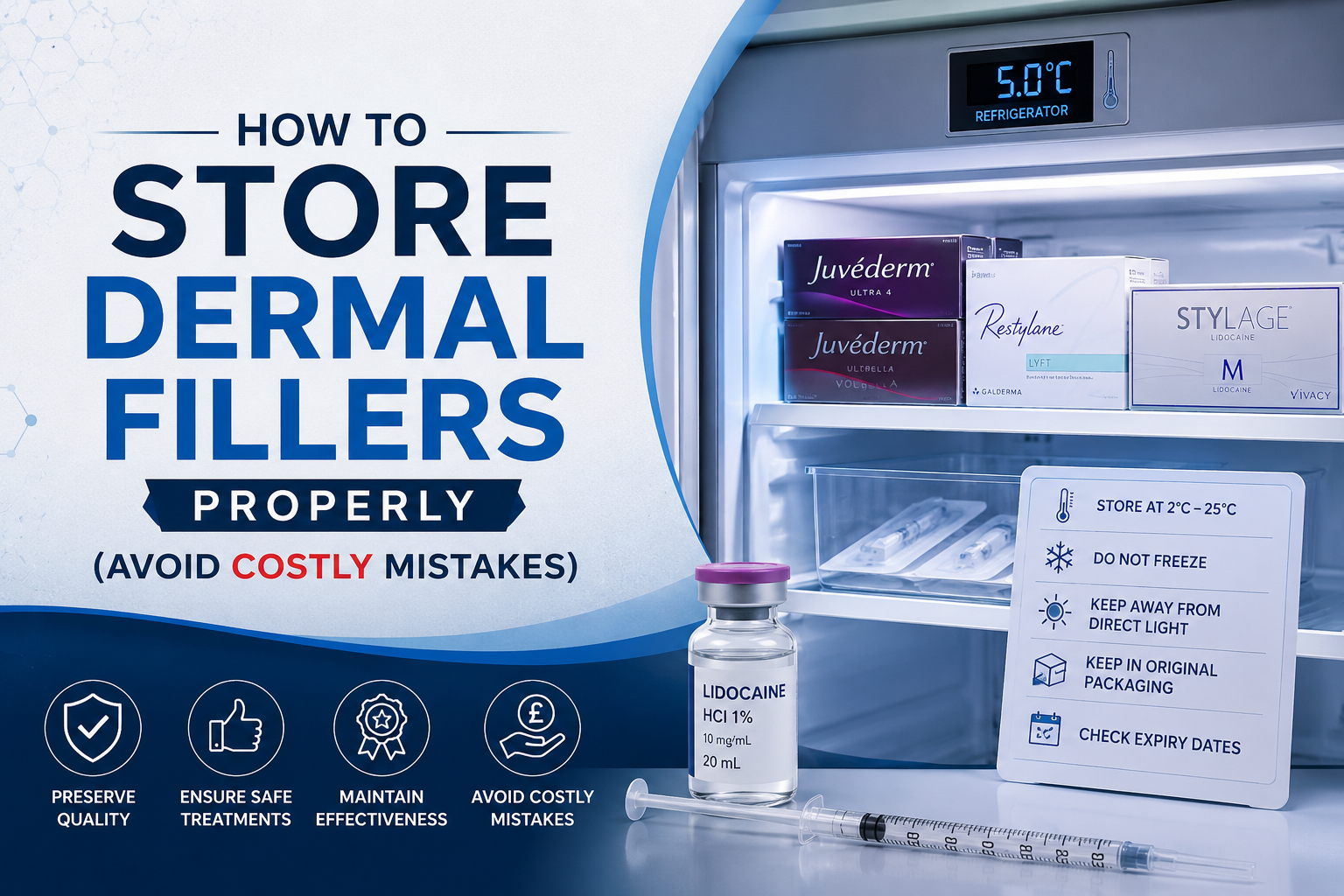
How to Store Dermal Fillers Properly (Avoid Costly Mistakes)
If you’re running an aesthetic clinic or buying dermal fillers in bulk, improper storage isn’t a small mistake it’s a silent profit killer.
Most practitioners focus on injection technique but completely ignore storage protocols. That’s how products lose effectiveness, results become inconsistent, and worst of all — client trust gets damaged.
Let’s break down exactly how to store dermal fillers the right way.
Why Proper Storage of Dermal Fillers Matters
Dermal fillers are sensitive medical products.
If stored incorrectly, they can:
- Lose viscosity and effectiveness
- Become unsafe for use
- Deliver poor or short-lived results
- Lead to client dissatisfaction and complaints
That means wasted money, repeat corrections, and damage to your clinic’s reputation.
Ideal Temperature for Dermal Fillers
Most hyaluronic acid-based fillers should be stored between:
2°C to 25°C
But here’s where many clinics mess up:
- Too cold → product structure may degrade
- Too hot → reduced shelf life and effectiveness
Never freeze dermal fillers. Freezing can permanently damage the gel structure.
Always check manufacturer guidelines for each product not all fillers are identical.
Should You Refrigerate Dermal Fillers?
This depends on the brand.
Some fillers require refrigeration, while others are stable at room temperature.
The mistake?
Clinics assume all fillers need a fridge or none do.
That’s lazy handling.
Best practice:
- Store unopened fillers in a controlled, stable environment
- Avoid frequent temperature changes
- Use medical-grade refrigeration if required
Protect Fillers from Light and Heat
Exposure to direct sunlight or heat sources can degrade active ingredients.
Avoid:
- Placing products near windows
- Storing near heaters or equipment
- Leaving products in transport packaging for too long
Consistency is key not just temperature.
Always Keep Fillers in Original Packaging
Never remove fillers from their original boxes until use.
Why?
- Protects sterility
- Prevents contamination
- Keeps batch and expiry information intact
If you’re removing packaging early, you’re increasing risk for no reason.
Check Expiry Dates Every Time
Expired fillers are not just ineffective they’re dangerous.
Create a system:
- First In, First Out (FIFO) inventory method
- Regular stock audits
- Clear labeling and tracking
Clinics that ignore this eventually pay for it.
Transportation Mistakes That Destroy Fillers
Most damage doesn’t happen in storage it happens during delivery.
Common mistakes:
- Buying from unreliable suppliers
- No temperature-controlled shipping
- Long transit times
If your supplier can’t guarantee proper handling, your product quality is already compromised before it reaches you.
The Real Risk: Cheap and Poorly Stored Products
Here’s the part most people avoid:
Low-cost fillers often come with poor storage and shipping standards.
That means:
- Unknown temperature exposure
- Compromised product integrity
- Higher complication risks
Saving money upfront often leads to bigger losses later.
Best Practices for Clinics (Simple but Ignored)
Follow this and you’ll outperform most clinics:
- Store products in a clean, controlled environment
- Maintain stable temperature at all times
- Use reliable, verified suppliers
- Train staff on handling protocols
- Monitor storage conditions regularly
It’s not complicated but it requires discipline.
Where Clinics Go Wrong
Let’s be honest:
Most storage mistakes come from carelessness, not lack of knowledge.
- Overordering without proper storage space
- Ignoring temperature fluctuations
- Buying from cheap, unverified sources
- No inventory system
These are operational failures not technical ones.
Final Thought
Your results are only as good as the products you use and how you store them.
You can have perfect injection technique, but if your filler is compromised, the outcome will never meet expectations.
Source Your Fillers the Right Way
At EAD UK, we understand that product quality doesn’t start at injection — it starts with sourcing and storage.
We supply clinic-grade dermal fillers handled with proper storage standards to ensure safety, consistency, and performance.
Browse our collection and upgrade how your clinic handles aesthetic products.